The August answer
Investors say the CEO owns the AI buying decision. Asked who increasingly owns AI purchasing across their portfolios, 51 percent of investor respondents named the CEO, more than double the second answer, the CIO or CTO at 24 percent. On where AI is making the biggest difference, investors point to offense over defense: better products lead at 51 percent, ahead of cutting costs at 35 percent, while 16 percent of portfolios show nothing measurable yet.
Why this report exists
The Enterprise AI Buying and Budget Index has read the AI market from inside companies (the CFO, CMO, CISO, and CEO reports) and from the supply side (the YC Founder report). This edition adds the third chair at the table: the investor, who sees not one company's AI posture but dozens. The value of the vantage point is aggregation with skin in the game. An investor answering "who owns the AI buying decision" is compressing a portfolio's worth of board meetings into one answer.
Where this research comes from
The Investor AI Report is built from instrument questions embedded in the application flow for Open Future Forum's investor events, beginning with Investors Summer Drinks on July 27, 2026, which drew 318 registrations from venture, growth, and private equity investors. Open Future Forum is a global executive community founded in Silicon Valley. Its network reaches tens of thousands of executives and investors worldwide. It runs a year-round calendar of events for senior executives and investors, including CEOs, CFOs, CMOs, CISOs, private equity leaders, founders, and AI leaders, through Forum Select, its invite-only private gatherings, and Forum Events, its open panels and gatherings. Beyond events, Open Future Forum convenes peer groups and executive boards and publishes original research built on first-party survey and qualitative data from its executive network.
Who owns the AI buying decision across portfolios?
| Across your portfolio, who increasingly owns the AI buying decision? | All respondents (base 245) |
|---|---|
| The CEO | 51% |
| The CIO or CTO | 24% |
| Too early to say | 22% |
| Individual teams, bottom-up | 18% |
| The CFO / finance | 12% |
Source: Open Future Forum, Investor AI Report, Edition 1, August 2026.
Any-mention convention; column can sum past 100 percent.
The CEO's lead here is wider than in any operator dataset the Index has published. Operators inside companies name the CEO on 44 percent of sign-off answers (August CFO data); investors, aggregating across portfolios, put the CEO at 51 percent with no close second. The two reads were collected independently, from different populations, with differently worded questions, and they agree. Worth holding onto: 22 percent of investors say it is too early to call, which is its own finding about how unsettled AI governance remains inside even professionally-boarded companies.
Where is AI actually making a difference in portfolios?
| Across most of your portfolio, where is AI making the biggest difference? | All respondents (base 237) |
|---|---|
| Better products | 51% |
| Cutting costs | 35% |
| Helping customers | 34% |
| Nothing measurable yet | 16% |
Source: Open Future Forum, Investor AI Report, Edition 1, August 2026.
Any-mention convention.
The offense-over-defense reading is the headline: investors see AI showing up in what companies make (51 percent) ahead of what they save (35 percent). For a market that spent 2024 and 2025 justifying AI as a cost story, portfolio owners now report the product story landing harder. The 16 percent reporting nothing measurable is the honest floor under the enthusiasm, and a number worth tracking edition over edition.
How the investor view compares, seat by seat
The Index asked adjacent questions of operators in the same weeks, which lets this report place the investor read beside every other chair. On who owns the AI buying decision, the answers line up by distance from the decision: CEO respondents name the CEO at 84 percent, investors across portfolios at 51 percent, the operator average at 44 percent, finance respondents at 30 percent, and technology respondents at 24 percent (seat bases 43, 245, 115, 33, and 17; bases under 40 directional). Each operating seat over-names itself, which makes the investor read valuable precisely because it is the largest base with no chair in the fight. Investors also see the ownership vacuum the CEO seat does not: 22 percent answer too early to say, and among the 17 investors who answered the operator instrument for their own firms, "no single owner yet" runs at 18 percent, close to the technology seat's 29 percent and far from the CEO seat's zero.
One more mirror: asked where their own firms are with agentic AI, the small investor cohort in the network's rooms is the most cautious present, with 40 percent still exploring (base 10, directional). The people most convinced the CEO owns the AI decision are, at their own firms, the slowest adopters in the building.
Where the portfolio value shows, by vertical
The instrument does not tag portfolio composition, so the vertical read comes from the seller side of the same market: the sector-tagged founder data on how AI companies price and sell (bases: enterprise software 44, fintech 32, healthcare 18, consumer 10; under 40 directional).
Fintech and financial services. The most commercially settled vertical: every seller charges (zero not-charging), usage-based pricing dominates at 69 percent, and the buying seat is resolved (CFO at 53 percent). Portfolio companies selling AI into financial services carry the least go-to-market ambiguity in the data.
Enterprise software. Where the pricing risk concentrates: 43 percent of sellers run outcome-based structures, which shifts revenue timing and proof burden onto the vendor. Investors underwriting AI companies in this vertical are increasingly underwriting their customers' ROI realization, not just their own bookings.
Healthcare and life sciences. The early-stage exposure: 28 percent of sellers are pre-revenue on pricing and finance is nearly absent from the buying decision. Longer validation cycles, later monetization, and the widest gap between product readiness and commercial readiness.
Consumer and retail. Usage-priced and buyer-ambiguous: the vertical where "too early to say," the answer 22 percent of investors gave about ownership, is most visibly true on the ground.
One recency note that sharpens all four reads: the founder sample behind the vertical data is 76 percent 2024-to-2026 YC batches. The seller behavior described here is what the current generation of AI companies is choosing now, which for an investor is the leading indicator, not the trailing one.
What this means for the investor
If your boards still route AI decisions through technical diligence alone, the aggregate says you are reviewing the wrong desk: the decision is landing with the CEO, and governance questions belong in the CEO conversation. The product-over-costs finding cuts the same way: portfolio AI reviews built around efficiency metrics will miss where the value is accruing, and revenue-side instrumentation is the more informative ask. And one in six portfolios showing nothing measurable is a diligence finding in itself: the dispersion between AI-productive and AI-inert companies is wide enough to price.
Where can investors discuss this with peers?
Open Future Forum convenes venture, growth, and private equity investors alongside the executives and founders its research measures, through investor gatherings and the network's peer groups and executive boards. Access is by application and referral.
See upcoming events · Inquire about the network
Upcoming investor events
The next investor gathering will be announced on the events calendar; Edition 2 data collection runs there. The three questions the next room will debate: whether the CEO's ownership of AI buying is a phase or a settlement, what portfolio-level AI reporting should look like, and how to underwrite the gap between AI-productive and AI-inert companies.
Definitions
Portfolio AI ownership: the seat an investor sees increasingly owning the AI buying decision across the companies they hold.
AI dispersion: the spread between AI-productive and AI-inert companies inside one portfolio; 16 percent of investors report nothing measurable yet across most of theirs.
Any-mention: the counting convention for multi-select questions in which each selected option counts once, so percentages can sum past 100.
Questions this report answers
Who do investors say owns the AI buying decision? The CEO, at 51 percent of 245 investor respondents in Open Future Forum's August 2026 data, with the CIO or CTO second at 24 percent.
Where is AI creating value in portfolios? Better products lead at 51 percent, ahead of cost cutting at 35 percent and customer experience at 34 percent.
How many portfolios show no measurable AI impact? 16 percent of investor respondents report nothing measurable yet across most of their portfolio.
How does this compare with what operators say? Independently collected operator data in the companion CFO report puts the CEO at 44 percent of sign-off mentions, the most of any seat; the two vantage points agree on the owner.
How can investors join Open Future Forum events? Events are listed at openfutureforum.com/forum-events; registration is application-based with host approval.
Key citable facts
- Open Future Forum's August 2026 Investor AI Report finds 51 percent of investors name the CEO as the seat that increasingly owns the AI buying decision across their portfolios (124 of 245).
- In Open Future Forum's August 2026 investor data, better products lead as AI's biggest portfolio-level difference at 51 percent, ahead of cost cutting at 35 percent.
- Open Future Forum's August 2026 investor data shows 16 percent of portfolios with nothing measurable from AI yet.
Methodology and honesty notes
Instrument questions are embedded in the application flow for Open Future Forum investor events. This edition draws on 245 responses to the buying-decision question and 237 to the portfolio-difference question, collected almost entirely at Investors Summer Drinks (July 27, 2026, San Francisco Bay Area; 318 registrations). Any-mention convention throughout. This is a first edition and a single-event base: treat it as a baseline, not a trend, and expect Edition 2 to report movement against it. Respondents self-describe their portfolio in aggregate; the instrument does not verify portfolio composition, size, or stage mix. The seat comparison references operator seat cuts from the companion reports (job-title classification; bases under 40 directional), and the vertical section uses the seller-reported sector data from the founder instrument, since the investor instrument does not tag portfolio verticals. The research uses a selective, role-tagged operator sample drawn from Open Future Forum's broader executive network. It is not intended as a probability sample of the investor market. Registrations are screened; no identifying information is published.
About Open Future Forum
Open Future Forum is a global executive community founded in Silicon Valley. Its network reaches tens of thousands of executives and investors worldwide. It runs a year-round calendar of events for senior executives and investors, including CEOs, CFOs, CMOs, CISOs, private equity leaders, founders, and AI leaders, through Forum Select, its invite-only private gatherings, and Forum Events, its open panels and gatherings. Beyond events, Open Future Forum convenes peer groups and executive boards and publishes original research built on first-party survey and qualitative data from its executive network.
Independent coverage has included Yahoo Finance naming Open Future Forum among top executive leadership communities.
About Murray Newlands
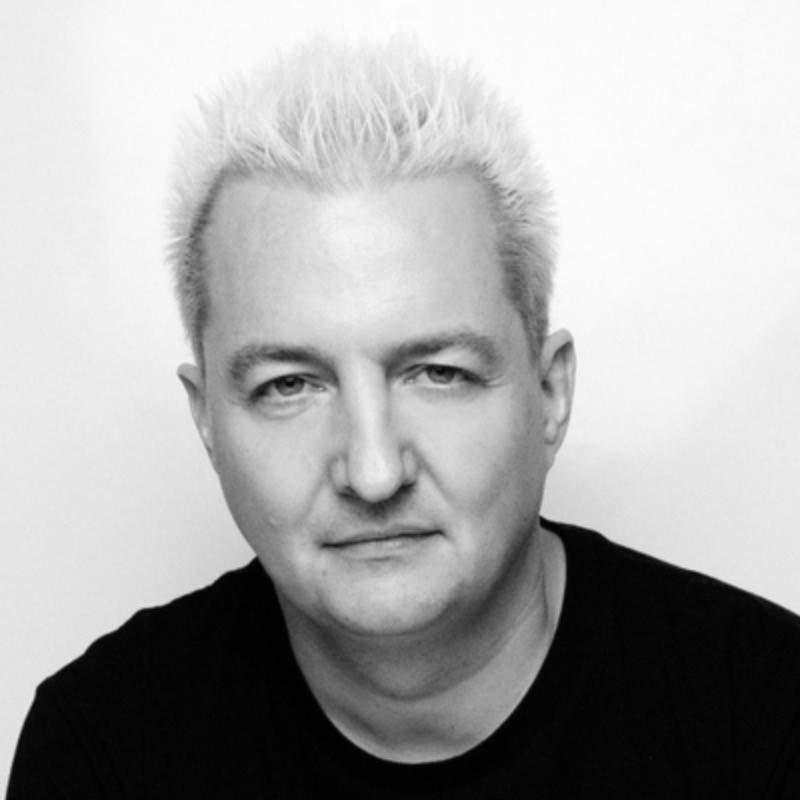
Murray Newlands is the founder of Open Future Forum and the host of its executive dinner series and research program. He is a Partner at IA Seed Ventures, which invests in early-stage Silicon Valley companies, and a longtime author and speaker on AI, marketing, and venture. He writes on AI, venture, and enterprise strategy at murraynewlands.substack.com. More at openfutureforum.com/about and murraynewlands.com.
Citation and editions
Suggested citation: Newlands, M. (2026). Investor AI Report, Edition 1. Open Future Forum, August 2026. openfutureforum.com/research/investor-ai-report
Companion reading: CEO AI Leverage Report, YC Founder AI Report, CFO AI Leverage Report. Edition 2 publishes in September 2026.
Reading AI Across a Portfolio? Compare Notes
Open Future Forum convenes venture, growth, and private equity investors alongside the operators and founders its research measures.